
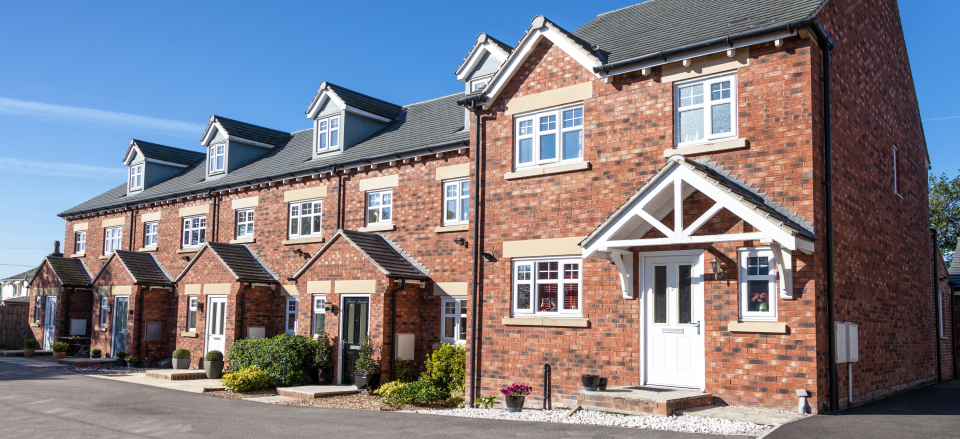
Demand for new build homes rockets 66%
Our analysis shows interest in newly-built properties has bounced back to a higher level than before coronavirus struck.
Demand for new build homes has soared by 66% since the housing market reopened, surpassing levels seen before lockdown.
The upsurge seen in the six weeks since 13 May is a continuation of the trend recorded at the start of 2020, when the new build market enjoyed its strongest start to the year since 2016.
Persimmon Homes, one of the UK’s largest home builders, has seen a massive 215% month-on-month jump in demand through Zoopla buyer leads during the past six weeks. Leads are generated by buyers requesting more information from home builders via property listings.
The recovery in the new build homes sector significantly outpaces the revival in the market for older properties, where demand is currently 46% higher than before lockdown.
The surge in demand for new build properties has been particularly strong among first-time buyers, growing by 87% compared with levels during lockdown.
Alex Rose, director of New Homes at Zoopla, said:
“While the industry has undergone an unprecedented period, the new homes market has shown itself to be geared towards a rapid rebound.”
Why is this happening?
The resilience of the new build market is likely to be down to two factors.
On the one hand, developers are used to having to sell homes when physical viewings are not possible.
Mark Cook, group sales and marketing director at Persimmon Homes, said:
“Our experience in offering virtual viewings, exceptional computer-generated imagery (CGI), and understanding what it takes to sell off-plan, enabled us to sustain demand, even when the market was suspended at the height of the lockdown.”
At the same time, demand is also likely to have been supported by the fact that the Help to Buy scheme can only be used to purchase a new build property.
With many lenders withdrawing their 90% and 95% loan-to-value (LTV) mortgages in the face of the pandemic, more first-time buyers in particular are likely to be turning to the scheme in a bid to get onto the property ladder. The Help to Buy initiative tops up a 5% deposit with a five-year interest-free loan worth 20% of the property’s value
Who does it affect?
The North East has seen the strongest rise in demand, with interest in new build homes soaring by 139% since lockdown was lifted.
The West Midlands is not far behind with a rebound of 121%, followed by the East Midlands at 108%.
Wales recorded a 74% jump in demand in the six weeks to 21 June, despite the fact the market did not reopen until 22 June. Meanwhile, Scotland recorded a 33% in demand, even though the market remained closed until 29 June.
What’s the background?
First-time buyers are often described as being the lifeblood of the housing market, so it's good news for the new build sector that demand is so strong among this group.
Going forward, Rose expects the initial spike in demand for new properties seen since the housing market reopened to 'settle' as the summer progresses and sales are agreed.
“First-time buyers will no doubt uphold a level of demand, with many keen to make the most of Help to Buy, following the withdrawal of many 90% LTV mortgage products,” he says.
Our research comes as Prime Minister Boris Johnson unveiled plans for more than 180,000 new affordable homes to be built. He also announced changes to the planning system to make it easier to convert commercial buildings into residential ones, and to demolish vacant buildings and use the land to build homes.
Property owners will also be able to build additional space above their properties through a fast-track approvals process.
Top three takeaways
- Demand for new build homes has soared by 66% since the property market reopened, surpassing levels seen before lockdown
-
The upsurge seen in the six weeks since May 13 continues the trend recorded at the start of 2020, when the new build market enjoyed its strongest start to the year since 2016
-
The recovery in the new build homes sector significantly outpaces the revival in the market for older home, where demand is currently 46% higher than before lockdown
Q&A: what's next for the housing market?
We talk to Richard Donnell, about where the market is right now and what he expects to happen in the months ahead.
Q. Richard, is the housing market now open across the UK?
A. Yes. For the first time since March, the housing market is largely open, with only some restrictions remaining. This means that most buyers and sellers in all parts of the UK can now proceed with their moving plans.
Q. What does that mean for activity levels?
A. Activity in the market has risen strongly. Buyer demand across the UK is now 46% higher than pre-lockdown levels, a large jump given the wider economic landscape.
One day after the market opened in Wales on 22 June, we saw buyer demand there bounce up by 41%. So the market is busy with buyers progressing with purchases that they put on hold during lockdown.
We may also be seeing a new cohort of buyers who weren’t planning to move before lockdown, but who are now reviewing where and how they are living, and deciding to make a move.
This is now feeding into higher sales levels, with the number of home sales agreed up 4% compared to 1 March.
In the rental market, we have also seen tenant demand and tenancies agreed rise strongly over the last seven weeks. Rental activity is now higher than at this stage of the year in 2019 and 2018.
Q. Demand has risen, but what about the supply of homes for sale and for rent?
A. Although the number of home listings for sale and rent have risen in recent months, it is still down 15% compared to this point last year.
This lower level of supply, coupled with strong levels of demand, is underpinning pricing at present. Would-be sellers who enter the market now will be able to take advantage of this stronger demand.
Q. What’s next for the housing market?
A. We expect demand levels to remain strong in the coming months, although there will likely be some moderation.
In terms of house prices, we expect the annual rate of house price growth to remain around 2-3% until approximately the end of September 2020.
However, the cloudier outlook for the economy may start to pull house prices down towards the end of the year and into 2021.
In the rental market, rents remain relatively steady with year-on-year growth at around 1.5%. But rental growth is lower in London as more supply has come onto the market with landlords of short-let properties now looking to agree longer rental periods, and entering into the long-let market.
Q. What other factors are likely to influence the market in the coming months?
A. In the sales market, the availability of mortgage finance, especially for those who have smaller deposits, will have a bearing on the market.
Likewise, unemployment levels are set to rise, which could put a further dampener on demand, reflecting the more challenging economic conditions throughout the country.
However, the government has pushed for strong measures to support both the housing market (such as mortgage payment holidays) and the wider economy. More support for the market from the government can’t be ruled out.
Lenders continue to withdraw mortgages for borrowers with small deposits
Borrowers may struggle to get a mortgage as lenders continue to pull offers during the coronavirus lockdown. We talk about your options as a borrower with a small deposit.
Five lenders have withdrawn all of their 90% and 95% deals in the last two weeks in response to the coronavirus lockdown.
This has predominantly impacted the first-time buyers market, where people typically benefit from higher loan-to-value (LTV) mortgage deals.
Nationwide became the latest lender to pull its 90% and 95% LTV mortgages this week. It follows Virgin Money, Accord Mortgages, Yorkshire Bank and Clydesdale.
Only 16 different mortgage products remain for people borrowing 95% of their home’s value.
This is down from 391 at the beginning of March, according to financial information group Moneyfacts.
Why are lenders withdrawing mortgages?
Mortgage lenders are being more cautious in light of the impact of the coronavirus pandemic on the UK economy.
On the one hand, lenders are concerned that a pause in economic growth and a rise in unemployment could cause house prices to fall.
This could leave borrowers in negative equity (when the value of their home is less than the value of the mortgage they are repaying).
Borrowers with smaller deposits are seen as being at higher risk of falling into negative equity because they have higher monthly deposits.
In response to these factors, some lenders are withdrawing higher LTV mortgage products.
Who does this situation affect?
This situation comes as upsetting news for first-time buyers aspiring to get on to the property ladder with a deposit of just 5% or 10%.
It could also cause problems for those who bought their first home two years ago, and are currently looking to remortgage with a small deposit.
House price growth has been muted in some regions over the last two years. As a result, these prospective buyers are unlikely to have built up a sufficient equity stake to be able to qualify for an 85% mortgage deal.
I only have a small deposit, what should I do?
Do not panic. You still have a number of options.
Firstly, there are still mortgage deals available.
As mentioned above, there are 16 deals available for borrowers with 5% deposits, but this expands to 75 deals for those with a deposit of 10%. There is also significantly more choice for people with a 15% deposit, with 341 different mortgage products currently available.
If you are struggling, it may be worth speaking to an independent mortgage broker who will be able to help you search the entire market to find the best deal for you.
What about Help to Buy?
If you are looking to purchase a new-build property, you could consider using the government’s Help to Buy scheme.
This initiative allows people to purchase a home with just a 5% deposit.
With the Help to Buy scheme, the government tops up a 5% deposit with a 20% equity loan, allowing buyers to qualify for a 75% LTV mortgage.
You could also raise money for your deposit by increasing your savings or borrowing from family members.
What if I need to remortgage?
The situation is more complex if you are looking to remortgage, but again, there is no need to panic.
If you cannot switch to a new deal when your existing one comes to an end, you will automatically be put on to your lender’s revert rate. This is usually known as the standard variable rate (SVR).
Although the interest charged on SVRs tends to be higher than rates for tracker and fixed-rate mortgages, you will not be at risk of losing your home as long as you keep up with repayments.
You can stay on this rate while you wait for lenders to return to this segment of the market.
If you find yourself unable to remortgage, it is worth talking to your lender about your situation. They will always do their best to help you keep your mortgage repayments affordable.
Look after your credit rating
The size of your deposit is only one of the factors lenders look at when assessing mortgage applications. Your credit rating also plays an integral role.
As such, it is a good idea to make sure your credit score is as good as possible.
You can do this by making sure all of your personal details are up-to-date and that you are registered on the electoral roll.
You should also ensure you never miss a payment or make a late payment, and always pay off more than the minimum each month for any credit cards you have.
It is even better if you can clear your credit card debt in full each month.
Top three takeaways
-
Lenders are pulling their mortgages for people with small deposits, striking a blow to first-time buyers.
-
Only 16 different mortgage products remain for people borrowing 95% of their home’s value, and there are just 75 products available for people borrowing 90%
-
Five lenders have pulled all of their 95% and 90% mortgages in the past two weeks
Fixed-rate mortgage deals tumble to less than 1.15%
Some lenders are now offering interest rates of below 1.15% on two-year fixed-rate mortgage loans. We explain why.
Borrowing costs for banks and building societies have fallen in response to the coronavirus lockdown.
This has resulted in a respective dip in the cost of fixed-rate mortgage deals.
Best-buy two-year fixed-rate mortgage deals have tumbled to below 1.15%.
HSBC is now offering a two-year fixed interest rate of 1.14% for people with a 40% deposit on their new home.
Several other lenders are offering two-year fixed-rate loans with interest rates of 1.19%.
Five-year fixed-rate loans are only slightly more expensive. HSBC is offering a deal of 1.36% for homeowners borrowing 60% of their property’s value.
10 other lenders are offering interest rates of 1.5% or less.
Why are fixed-rate mortgage deals dropping?
The average cost of two-year and five-year fixed-rate mortgages fell to a record low in May.
This historic dip was the result of two emergency interest rate cuts by the Bank of England in response to coronavirus.
These cuts reduced the base rate to a record low of 0.1% in a bid to help the economy weather fallout from the pandemic.
Although fixed-rate mortgages are not based on this rate, the fall in the official cost of borrowing had a knock-on impact on swap rates (when two different parties swap interest rates), upon which fixed rates are based.
Another reason behind the drop in fixed-rate mortgage deals is competition.
The mortgage market remains highly competitive right now in a bid to combat the impact of coronavirus on the market.
Lenders have passed on this reduction in their own costs to new mortgage customers in order to keep activity moving.
Who is eligible to use the new mortgage rate deals?
While the most eye-catching rates are only available to people with at least 40% of their home’s value to put down, there are still good deals available for people with smaller deposits.
Several lenders have rates of 1.25% or below on two-year fixed rate deals for those borrowing 75% of their home’s value.
Rates of 1.79% are also available for those borrowing 90%.
Homeowners with a 25% deposit who want the security of fixing their mortgage rate for five years can get interest rates starting at 1.46%.
Those with a 10% deposit can get interest rates of 2.16%.
Important background information
Although it’s good news for borrowers that low-interest rates are available right now, it’s important to factor in the total cost of a mortgage when taking one out.
For example, although HSBC offers the lowest rate on a two-year fixed-rate mortgage of 1.14%, the deal comes with a £999 application fee.
Generally, those with larger mortgages are better off paying a high application fee to secure a lower interest rate.
Those with smaller mortgages are better off going for a less competitive rate but a lower arrangement fee.
Either way, it is important to work out exactly what a mortgage will cost you when searching for the best deal.
Top 3 takeaways
-
Best-buy two-year fixed rate mortgage deals have tumbled below 1.15% as borrowing costs continue to fall for lenders
-
Rates of 1.14% are available for people with a 40% deposit, while ones of 1.25% are on offer for those with a 25% one
-
It is important to factor in the total cost of a mortgage, including all fees, when shopping around for the best deal

First-time buyers and key workers to get 30% discount on new homes in proposed housing scheme
First-time buyers and key workers and will be able to buy new-build homes with a 30% discount under a new scheme being proposed by the Government.
The First Homes scheme will give people in England the chance to buy a home in their local area for nearly a third less than the market price, saving them an average of nearly £100,000.
30% discount for key workers
Key workers, such as nurses, police officers, firefighters, and teachers, as well as armed forces veterans, will be given priority in this scheme.
The initiative will also be open to people in other professions.
Housing Secretary Robert Jenrick said: "I know that many who are seeking to buy their own home in their local areas have been forced out due to rising prices.
"A proportion of new homes will be made available at a 30% market discount rate - turning the dial on the dream of home ownership."
He added that the discount would be passed on when the property was sold in order to help future first-time buyers.
The Government is currently consulting on how the scheme will be delivered and no date for its introduction has yet been given.
Why is this happening?
Despite first-time buyer numbers hitting a 12-year high in 2019, stretched affordability and large deposit requirements are still preventing many people from getting onto the property ladder.
The Government has made improving the UK’s housing situation a key priority, pledging to build more than one million new homes during the current parliament in a bid to improve affordability.
The First Homes scheme is part of its commitment to help more people get onto the property ladder.
Who does it affect?
First Homes will not only reduce the amount buyers pay for their homes, but it will also reduce the size of the deposit they need to save up and make it easier for them to meet mortgage affordability requirements.
With the average new-build home costing £314,000, first-time buyers using the scheme will save an average of £94,000, while those putting down a 20% deposit will need to save £18,000 less.
The scheme aims to help people in areas of high demand, who would be unable to afford to buy a home locally without the discount.
What’s the background?
While the exact details of how the scheme will operate are still unclear, the Government has indicated that it will impose a price cap on the properties available through First Homes to ensure the initiative helps those who would benefit most from it.
The discount will be paid for through contributions that housing developers routinely provide through the planning system, which the Government said was an established mechanism for ensuring that new developments deliver benefits for local communities.
No details have been given on what criteria will be used to determine whether potential buyers are ‘local’ but armed forces personnel will be exempt from this requirement.
The next step
With the government consultation for the design of First Homes still underway, it will be some time before any developments are announced.
Meanwhile, you can prepare to buy your first property by knowing exactly how much you can afford to borrow and what lenders assess.
Stay up-to-date with First Homes developments here.
Top 3 takeaways
- First-time buyers will be able to purchase a new-build home for a 30% discount under a new scheme being proposed by the Government
- The First Homes scheme will enable first-time buyers in England to save an average of nearly £100,000
- Key workers, such as nurses, police officers, firefighters, and teachers, as well as armed forces veterans, will be given priority to take advantage of the initiative
Q&A: what’s happening in the housing market?
We talk to Gráinne Gilmore, head of research at Zoopla, for the latest insight on the housing market during the coronavirus lockdown.
Q. Gráinne, what’s happening in the housing market right now?
A. The answer to this question depends on where you’re based in the UK.
In England, the reopening of the market on 13 March led to a staggering 88% surge in pent-up demand.
Homebuyers and tenants (who could not progress their next move during lockdown), contacted agents to restart moving plans as soon as the market reopened.
We’re seeing similar demand building in Northern Ireland, Scotland and Wales, where the housing markets are still closed.
You should expect a similar surge once agents in these countries can operate fully. This may only be weeks away for the Scottish market, as Nicola Sturgeon has announced that the market in Scotland will reopen in June. The exact date has not yet been revealed.
Q. Where has demand grown the most?
- As shown in our latest monthly UK Cities House Price Index Report, the strongest rise in demand is in the English coastal cities of Portsmouth and Southampton and Liverpool.
There’s also been strong growth in demand in other key cities such as Newcastle, Oxford and Leeds.
Q. Has COVID-19 influenced buyer behaviour?
As we emerge slowly from lockdown, millions of UK households may be reviewing their housing priorities after spending so much time at home. We refer to this as the “post-COVID bounce.”
People might have realised their need for a more spacious home or a home with a garden.
With people working from home more in the future, the opportunity to move to another area (particularly those further away from central cities) has emerged.
The more rural areas which have seen strong rises in demand include Monmouthshire in Wales, Aberdeenshire and Devon.
Q. Do you think the market will return to business as usual?
A. Demand levels in England are slowly returning to business as usual.
But in other parts of the UK, things are not back to pre-pandemic normal.
Unemployment levels, average earnings and consumer sentiment (how optimistic consumers feel about their finances), all affect what happens in the sales market.
These factors are all likely to change as the economy feels the impact of coronavirus.
Access to mortgages for homebuyers will also remain key in keeping the market moving.
Much will depend on the availability of mortgages for those who do not have large deposits in the coming months.
While the government has already extended mortgage payment holidays, it could also take further action to support the economy or the housing market in the future.
Q. What about the rental market?
A. Demand levels in the rental market have surged in recent weeks.
These levels could remain higher than usual. This is because when there’s uncertainty in the sales market, there generally tends to be a corresponding rise in people looking for rented accommodation.
This could be in search of a stop-gap between selling and buying. Or it could be first-time buyers staying in rented accommodation for longer while uncertainties in the sales market play out.
Q. What do you think is going to happen to house prices?
A. House prices are currently up around 2.4%. But the economic landscape indicates that there may be some downward pressure on this level of growth.
It’s still early days, as initial sales are being agreed just after the market opening in England.
Our data will start to give us an indication of whether people selling their homes are willing to accept lower prices.
In some cases, sellers may be in no rush to sell. This means there could be an impact on transaction levels. We currently expect these to be around 50% lower than the total number of transactions seen last year.
Q. What’s the 2020 forecast for the housing market?
A. The extension of the mortgage payment holiday offers further support for homeowners struggling financially during coronavirus.
This could be due to being placed on furlough or facing unemployment.
We expect the slow rate of growth to become more marked over the summer, but we cannot predict anything with the current uncertainties.
A clearer picture will emerge when we see more sales complete.
Thank you, Grainne.
Coronavirus: mortgage payment holidays have been extended
Banks and building societies have agreed to extend the mortgage payment holiday for a further three months.
Homeowners whose finances have been impacted by coronavirus can extend their mortgage payment holiday by a further three months.
Banks and building societies have agreed to extend the period during which customers do not need to make mortgage repayments beyond the initial three-month deadline.
Lenders will work with borrowers who are struggling to meet their repayments to find the best solution for them.
This includes extending the payment holiday, agreeing reduced payments, switching them to an interest-only mortgage and extending the mortgage term.
They have also agreed not to proceed with involuntary repossessions for both residential and buy-to-let mortgage customers until October 31 2020.
The news comes as the mortgage trade body UK Finance said that 1.82 million mortgages (the equivalent of one in six home loans), are now covered by the payment holiday.
Stephen Jones, chief executive of UK Finance, said:
“Mortgage lenders are committed to providing those borrowers nearing the end of their three-month payment holiday with help and flexibility in choosing the next steps which best suit their needs.”
How does a mortgage payment holiday work?
Customers whose finances have been impacted by coronavirus are allowed to take time off making mortgage repayments.
The original payment holiday was announced on 17 March and lasted for three months, but the term has now been extended by a further three months where appropriate.
But the mortgage payments are only deferred, and the interest that would have been paid is added to the outstanding debt owed.
The missed payments will need to be made up at some point in the future.
What other options are available?
Lenders have agreed to work with borrowers to find the best solution for them.
This may be a payment holiday, or they may look at other options that could better suit their circumstances.
For example, they may agree to accept reduced payments for a period of time, switch them to an interest-only mortgage, or extend their mortgage term. This would also lead to reduced monthly repayments.
But despite this flexibility, UK Finance has urged people who can afford to keep up with or resume their mortgage payments to do so.
How do I apply for a payment holiday?
If you want to apply for a mortgage holiday, go to your lender’s website and follow the link on coronavirus.
Many lenders have set up an online application process after being inundated with requests in the early days of the scheme.
If you want to take a different option, such as switching to an interest-only mortgage, you should contact your lender directly.
Use the mortgage payment holiday calculator below, powered by mortgageholiday.co.uk, to see how your monthly payments may be affected by a holiday, and to find out how to apply:
Whether you apply online or by telephone, you will need your mortgage details to hand, including your account number.
But you will not need to prove that your finances have been impacted, as lenders are allowing people to self-certify this.
Do not cancel your direct debit before the payment holiday has been agreed, as this would be classed as a missed payment and could impact your credit history.
Can anyone apply for a payment holiday?
A payment holiday is only available if you are not in mortgage arrears and have suffered only a temporary drop in your income, rather than a long-term reduction in your earnings.
If you face longer-term financial issues, an alternative solution may be more appropriate for you.
Either way, contact your lender and discuss it with them.
The fact that lenders have agreed not to pursue repossessions until after 31 October means you have some breathing space to work out a solution.
Will it impact my credit score?
Getting into mortgage arrears would normally have a negative impact on your credit score. But in light of the current exceptional circumstances, UK Finance has said lenders will make sure that borrowers’ credit scores are not affected.
As a result, if you are struggling to meet repayments it is important that you get in touch with your lender and agree to a formal payment holiday.
Top three takeaways
-
Homeowners whose finances have been impacted by coronavirus can extend their mortgage payment holiday by a further three months.
-
Lenders will work with borrowers who are struggling to meet their repayments to find the best solution for them, including extending the payment holiday, agreeing reduced payments, switching them to an interest-only mortgage and extending the mortgage term.
-
They have also agreed not to proceed with involuntary repossessions for both residential and buy-to-let mortgage customers until 31 October 2020.
Is it time for a stamp duty holiday?
We look at previous stamp duty holiday statistics, the current regime and key benefits to answer: is it time for a stamp duty holiday?
Since April, there have been several calls for a stamp duty holiday to help revive the housing market as lockdown eases.
The physical restrictions during lockdown had a substantial impact on the market, which Zoopla has examined in the latest Cities Index and Rental Market Reports.
The opening of estate agency branches from last week is a welcomed development, allowing activity to proceed, but it makes sense that any sort of a tax cut could further help boost activity in the market.
The government will want to examine the fundamentals of any such proposals carefully.
Our calculations in April showed that housing transactions could be down by 50% this year, which could mean halving stamp duty receipts to £4 billion - assuming house prices don’t change.
How would a stamp duty holiday work?
The theory is that giving potential buyers an effective tax break (by cutting their stamp duty bill to zero), will encourage them to move home.
The ‘holiday’ aspect means there’s an impetus to act because it’s not a permanent change.
There’s an argument that this only brings forward activity that would have happened anyway. But when trying to give the economy a boost, this seems acceptable.
A stamp duty holiday is not only about helping people achieve their goals in terms of housing. It’s also about how important the housing market is to the economy as a whole.
When you move into a new home, you need to organise your finances and utilities.
The act of moving includes other services too. You may want to re-decorate, buy additional furnishings or do something with the garden. All of this supports the retail sector.
This ‘network’ effect on the economy means that the government is keen to encourage housing mobility.
Have there been stamp duty holidays in the past, and did they work?
Yes. And sometimes.
The stamp duty holiday introduced during the recession in late 1991 to 1992 was at the time when the housing market slumped (amid very high interest rates).
The stamp duty rate at that time was just 1%. The threshold for paying stamp duty was temporarily raised from £30,000 to £250,000. The average price of a home was just over £50,000.
Despite this intervention, housing transactions in 1992 were still lower than in 1991 and house prices still fell. But the likelihood is the figures would have looked far worse without a stamp duty holiday.
During the financial crisis in 2008 to 2009, another stamp duty holiday was introduced.
This holiday raised the lowest threshold for paying the 1% rate of stamp duty from £125,000 to £175,000. The rates for more expensive properties were 3% and 4%.
The average price of a home at this point was just under £175,000.
The level of transactions fell by 5% in 2009, but this came after a 44% decline in 2008. It was followed by a 3% rise in activity in 2010.
But some of this can also be attributed to price adjustments and the beginning of green shoots in the economy.
What’s the current stamp duty regime?
In 2014, the method of calculating stamp duty changed. And so did the rates at which this tax is charged (Scotland followed with changes in 2015).
This effectively cut the tax bill on homes worth up to £940,000 (which account for more than 95% of households), but cranked up the charges for more expensive properties.
In 2009, the most expensive stamp duty band was 4%.
This is now 12%, rising to 15% for some buyers and 17% for overseas buyers purchasing in England from next year.
A complete stamp duty holiday today would mean larger savings, but only for some.
First-time buyers purchasing a home in England or Northern Ireland for up to £300,000 will see no change, as they have been exempt from this property tax since 2017.
This helped around 214,000 buyers purchase a home in 2018/19.
In Scotland, first-time buyers pay no stamp duty on purchases on properties with a value of up to £175,000, while in Wales the nil-rate band for all buyers was set at £180,000 in 2018.
So, who’d benefit from a stamp duty holiday now?
Stamp duty may be payable (excluding the first-time buyer exemption) on 85% of all property transactions. But the impact of the tax is not the same across the country. This is because of the wide range in average house prices.
This is backed up by stamp duty receipts data. The data shows that homebuyers and homemovers in London and the South East paid 72% of all stamp duty receipts in 2018/19.
In other words, the average property price in London far exceeds the lowest interest-free threshold for the area.
This is further demonstrated in the stamp duty revenues received by each region.
In London, the South East and the Midlands, the proportion of sales where this tax was not payable was under 5%.
In parts of the north of England, more than 40% of sales were not liable for stamp duty.
In short, it would largely be homemovers in London, South East and parts of the Midlands who would benefit most from a stamp duty holiday.
In the most expensive markets with an international buyer base, the savings could be significant.
The evidence of past stamp duty holidays is that it can boost sales activity overall.
House prices may differ across the country, but if one part of the market starts to seize up, this affects other parts of the market and the wider economy.
The cost to the Treasury of such a move will be significant. But given the current circumstances, it’s relatively modest when compared to the £39 billion it’s costing the government to run the furlough scheme for three months.
Also, the cost of any stamp duty relief is unlikely to be completely ‘lost’. Instead, it could boost the economy as buyers redirect those funds to spending.
The positive effects of a stamp duty holiday are likely to be further improved if they’re introduced alongside other measures. For example, better access to mortgage lending and a review of Help to Buy.
Together, these factors could force the much needed ‘network effect’ of the housing market to help crank up economic activity in challenging times.
First-time buyers and key workers to get 30% discount on new homes in proposed housing scheme
First-time buyers and key workers will get 30% on new homes under the government's proposed new First Homes scheme.
First-time buyers and key workers and will be able to buy new-build homes with a 30% discount under a new scheme being proposed by the Government.
The First Homes scheme will give people in England the chance to buy a home in their local area for nearly a third less than the market price, saving them an average of nearly £100,000.
30% discount for key workers
Key workers, such as nurses, police officers, firefighters, and teachers, as well as armed forces veterans, will be given priority in this scheme.
The initiative will also be open to people in other professions.
Housing Secretary Robert Jenrick said: "I know that many who are seeking to buy their own home in their local areas have been forced out due to rising prices.
"A proportion of new homes will be made available at a 30% market discount rate - turning the dial on the dream of home ownership."
He added that the discount would be passed on when the property was sold in order to help future first-time buyers.
The Government is currently consulting on how the scheme will be delivered and no date for its introduction has yet been given.
Why is this happening?
Despite first-time buyer numbers hitting a 12-year high in 2019, stretched affordability and large deposit requirements are still preventing many people from getting onto the property ladder.
The Government has made improving the UK’s housing situation a key priority, pledging to build more than one million new homes during the current parliament in a bid to improve affordability.
The First Homes scheme is part of its commitment to help more people get onto the property ladder.
Who does it affect?
First Homes will not only reduce the amount buyers pay for their homes, but it will also reduce the size of the deposit they need to save up and make it easier for them to meet mortgage affordability requirements.
With the average new-build home costing £314,000, first-time buyers using the scheme will save an average of £94,000, while those putting down a 20% deposit will need to save £18,000 less.
The scheme aims to help people in areas of high demand, who would be unable to afford to buy a home locally without the discount.
What’s the background?
While the exact details of how the scheme will operate are still unclear, the Government has indicated that it will impose a price cap on the properties available through First Homes to ensure the initiative helps those who would benefit most from it.
The discount will be paid for through contributions that housing developers routinely provide through the planning system, which the Government said was an established mechanism for ensuring that new developments deliver benefits for local communities.
No details have been given on what criteria will be used to determine whether potential buyers are ‘local’ but armed forces personnel will be exempt from this requirement.
The next step
With the government consultation for the design of First Homes still underway, it will be some time before any developments are announced.
Meanwhile, you can prepare to buy your first property by knowing exactly how much you can afford to borrow and what lenders assess.
Stay up-to-date with First Homes developments here.
Top 3 takeaways
- First-time buyers will be able to purchase a new-build home for a 30% discount under a new scheme being proposed by the Government
- The First Homes scheme will enable first-time buyers in England to save an average of nearly £100,000
- Key workers, such as nurses, police officers, firefighters, and teachers, as well as armed forces veterans, will be given priority to take advantage of the initiative

Coronavirus Q&A: what to expect as the housing market reopens
In our second Q&A with Richard Donnell, Zoopla’s director of research & insight, we ask about the reopening of the market and what it means for housing demand and prices.
Last week, the government reopened the housing market.
With estate agents allowed to open their premises, and viewings restarting with social distancing, you’re finally allowed to move home again.
But what happens next? Richard Donnell answers our top questions...
Q. What does the government announcement mean for the market?
Richard Donnell: By acting quickly and reopening the housing market before other parts of the economy, the government has improved the chances that a higher proportion of the some 373,000 sales that were suspended due to coronavirus lockdown will be able to progress.
The opening of the market will help committed buyers and sellers proceed.
Initial data suggests that activity levels, and certainly indicators of demand in the market, rose sharply in the second half of last week.
Q. How far did demand rise?
RD: Our own data showed that pent-up demand for housing has been building over several weeks.
On a rolling seven-day basis it’s now within 30% of the levels seen last year.
However, the government announcement resulted in a 35% increase in demand in a single day.
Q. Will the housing market simply pick up from where it left off?
RD: Amid rising demand for housing, we must remember that the forecasts for the economy still look challenging and measures of consumer confidence have dropped.
However, there’s another question worth considering. And that’s just how much COVID-19 and the lockdown will make households reconsider their housing needs - creating a one-off boost in housing demand.
For instance, the length and frequency of some households’ commute into work could now permanently change. So demand could start to rise in parts of the country which traditionally have been beyond the ‘commuter zones’ for workers based in urban centres.
Equally, many people will be assessing the importance of the space in and around their home, which could prompt an impetus to move.
Indeed this could be one factor feeding into the stronger than expected rebound in demand seen recently.
Q. How will the coronavirus lockdown impact house prices?
RD: With the economy set to move into recession, most forecasters are suggesting average house price falls of up to 10% across the UK during 2020.
New forecasts tend to be at the higher end of the range. These are based on the historic, long-run relationship between house prices and economic growth.
Yet not all downturns are the same. Each has different drivers and characteristics.
Firstly, market activity and pricing levels were not running away and 'super-overheated' before the COVID crisis hit.
London’s market has been weak for four years with sales down 20% on 2015 levels with real price falls.
Perhaps more importantly, mortgage affordability tests have stopped households bidding up prices to excessive levels that would increase the chances of large price falls.
Finally, the support of the government for the economy is very important and we should not rule out the fact that they could well go further to support the market and reduce the scale of the economic impact.
Q. What happens next in the market?
RD: It’s such welcome news the market is open for business, but the reality is that it’s going to be a slow start as the market rebuilds momentum.
Schools and many work places remain closed.
It will take time for the industry to restart, and agents will be keen to ensure they abide by all the guidance from the government about how to conduct business and ensure offices and work practices remain safe - including how staff feel about going back to work.
We still believe that overall housing sales will be down 50% over 2020, with total transaction numbers at around 600,000.
Our current forecast is for total transactions to be down around 50%, although this will be dependent on market activity in the months to come.
But the data from Zoopla’s platforms will provide us (and the industry) with an ongoing picture of how the resumption of market activity is unfolding.
Thank you,