
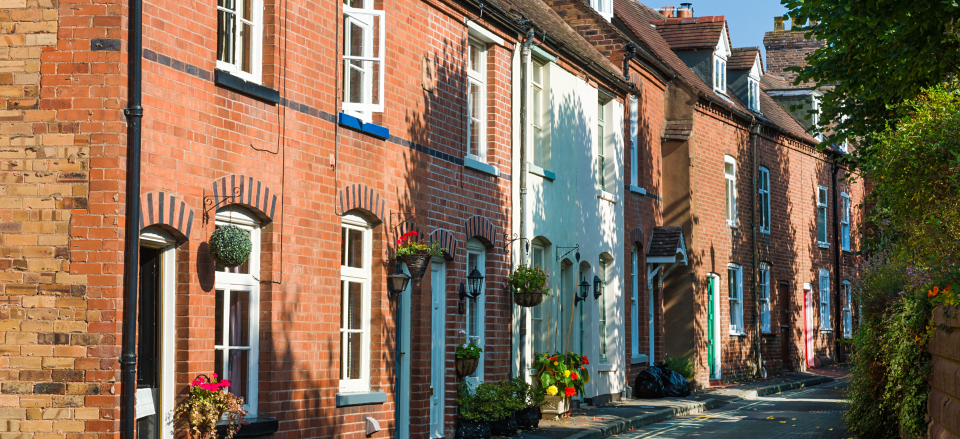
Private landlords sell up following tax changes
The number of homes available in the private rental sector has shrunk by more than 100,000 since tax changes impacting landlords were introduced.
The exodus comes after the Government began restricting the amount of mortgage interest tax relief buy-to-let investors could claim.
Since the change, which is being introduced in phases, was first introduced in April 2017, 103,900 more buy-to-let properties have been sold than those that have been purchased, according to estate agent Savills, which analysed mortgage data.
Lawrence Bowles, senior research analysts at Savills, said: “With tax relief on landlords’ mortgage interest shrinking, it’s become harder to make a profit from a mortgaged buy-to-let property.”
The situation means that demand in the private rental sector is already outstripping supply.
Why is this happening?
Since April 2017, the Government has been steadily reducing the amount of mortgage interest tax relief landlords can claim from 100% to just 25% now.
The relief will be phased out completely in April next year, when it will be replaced by a 20% tax credit for mortgage interest.
The move not only leaves landlords facing higher tax bills, but it has also pushed some basic rate taxpayers into the higher rate band.
The combined changes have made it less profitable to be a landlord, leading to many investors selling up.
Who does it affect?
The situation is bad news for people who rent in the private sector, which is already struggling to keep pace with demand.
The Royal Institution of Chartered Surveyors has reported that the number of new homes coming on to the market to let has been in steady decline, while the number of people looking to rent a home has reached its highest level since the end of 2016.
It warned that the situation was putting upward pressure on rents.
But the fall in buy-to-let landlords has been better news for first-time buyers, as the two groups typically compete for properties at the bottom of the housing ladder.
What’s the background?
Savills said the number of landlords selling properties was most acute in southern regions, such as London and the south east, where property prices are higher and yields are lower.
They are instead purchasing properties in northern regions where the higher yields cover their increased costs.
But high house prices in the south means demand for rental property is greater there as it takes people longer to get on to the housing ladder.
Top 3 takeaways
- The number of homes available in the private rental sector has shrunk by more than 100,000 since tax changes impacting the sector were introduced
- The exodus comes after the Government began restricting the amount of mortgage interest tax relief buy-to-let investors could claim
- Demand in the private rental sector is already outstripping supply.
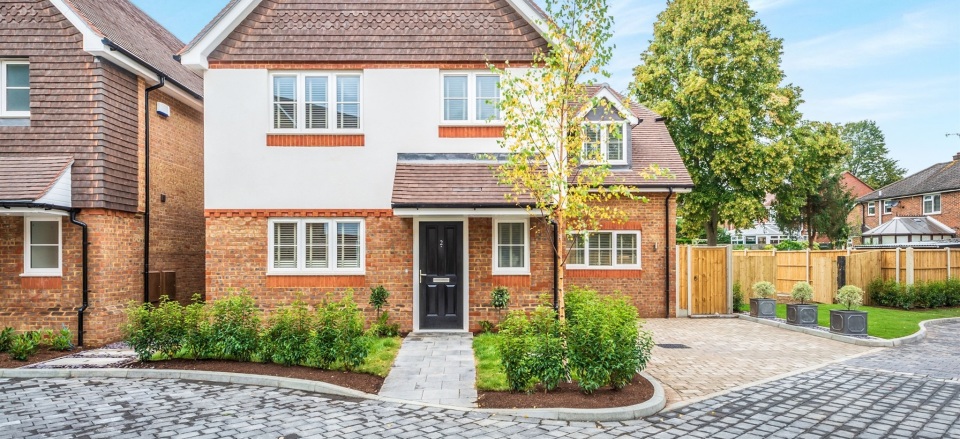
Help to Buy hotspots revealed
Wakefield in Yorkshire is England’s top Help to Buy hotspot with more people there using the scheme to buy a home than in any other local authority.
A total of 2,732 properties have been purchased in Wakefield, where the average new-build home costs £221,740, using the equity loan scheme since it was first launched in 2013.
It was followed by Wiltshire, where 2,725 equity loans have been advanced, and County Durham at 2,515, with Central Bedfordshire and Leeds completing the top five.
Wakefield was also the most popular area in which the scheme has been used during the past 12 months, followed by Central Bedfordshire and Tower Hamlets in London.
The findings come after separate research showed many first-time buyers were using the Help to Buy equity loan to buy larger, more desirable homes than they would otherwise be able to afford.
Why is this happening?
The Help to Buy equity loan scheme enables people to purchase a new-build property with just a 5% deposit with the Government topping this up with a five-year interest-free equity loan.
While the initiative is often seen as helping first-time buyers, it can be used by anyone trading up the property ladder.
Laura Howard, consumer expert at Zoopla, said: “Whilst it might be presumed that first-time buyers only use Help to Buy in markets with stretched affordability such as London, our analysis shows that its popularity actually spans the entire country.”
In fact, average house prices for the top 10 most popular locations in which the help to buy scheme was used in the past 12 months ranged from £196,783 in County Durham to £520,408 in Barnet in London.
Who does it affect?
As well as helping first-time buyers purchase a home, research shows the Help to Buy scheme has also enabled them to leapfrog the first rung of the property ladder and buy a larger, typically three-bedroom, property.
By entering their household income, preferred mortgage term and interest rate, it shows the maximum property value they could buy, how much they would need to save for a 5% deposit, estimated monthly mortgage repayments and monthly charges on the equity loan once the interest-free period comes to an end.
What’s the background?
While the Help to Buy equity loan scheme has helped thousands of people to get on to the property ladder, it is not suitable for everyone.
Potential buyers considering using the initiative need to weigh up the pros and cons, and while it may enable them to afford a bigger home, they are limited to purchasing a new-build property, while they can only use certain lenders.
Studies also suggest Help to Buy has inflated the cost of new-build properties, with first-time buyers in some areas paying a premium of up to 22% to use the equity loan scheme.

Remortgaging soars as homeowners cash in on competition among lenders
The number of people remortgaging has soared to a two-year high as homeowners take advantage of lenders’ end-of-year price war to lock into a good deal.
A total of 37,769 mortgages were approved for people switching to a new deal in October, 12.7% more than in the same month of last year, according to industry body UK Finance.
Mark Harris, chief executive of mortgage broker SPF Private Clients, said: “As we head towards the end of the year, and lenders jostle for what business there is out there, there are some incredible deals on the market to attract borrowers.”
There was also an increase in the number of mortgages approved for house purchase, with these rising 3% year-on-year to 46,631, despite the uncertainty caused by the General Election.
Why is this happening?
The final quarter is traditionally a busy time for remortgaging as banks and building societies try to entice homeowners with competitive deals in a bid to meet their annual lending targets by the end of the year.
This situation not only encourages people who are sitting on their lenders’ standard variable rate to remortgage, but it also means a higher volume of mortgages tend to expire during this period, due to people previously taking out fixed term deals in the run up to the end of the year.
The surge in remortgaging typically helps to offset a more subdued market for lending to people buying a new home, with house-hunters typically putting moving plans on hold until after Christmas
Who does it affect?
End of year competition among lenders is great news for anyone looking to remortgage.
Halifax is currently offering a two-year fixed rate mortgage of 1.08% for people with a 40% deposit, while NatWest is offering a two-year deal of 1.25% for those with a 25% deposit.
Rates ate only slightly higher for homeowners who want to fix for five years, with Virgin Money offering a deal of 1.46% for people borrowing 65% of their home’s value.
Nationwide, Halifax, NatWest and Royal Bank of Scotland all have five-year fixed rate loans with rates below 1.6%.
What’s the background?
The housing market has shown signs of enjoying a slight autumn bounce, although the lift has been more muted than in previous years.
Subdued transaction levels are partly due to the current uncertainty caused by both Brexit and the General Election.
But high house prices and stretched affordability in many areas are also acting as a drag on the market, particularly in southern regions.
Even once Brexit is finalised, activity levels are not expected to pick up significantly, with house price growth also expected to remain low.
Top 3 takeaways
-
The number of people remortgaging has soared to a two-year high as homeowners take advantage of lenders’ end of year price war
-
A total of 37,769 mortgages were approved for people switching to a new deal in October, 12.7% more than in the same month of last year
-
There was also an increase in the number of mortgages approved for house purchase, with these rising 3% year-on-year to 46,631