
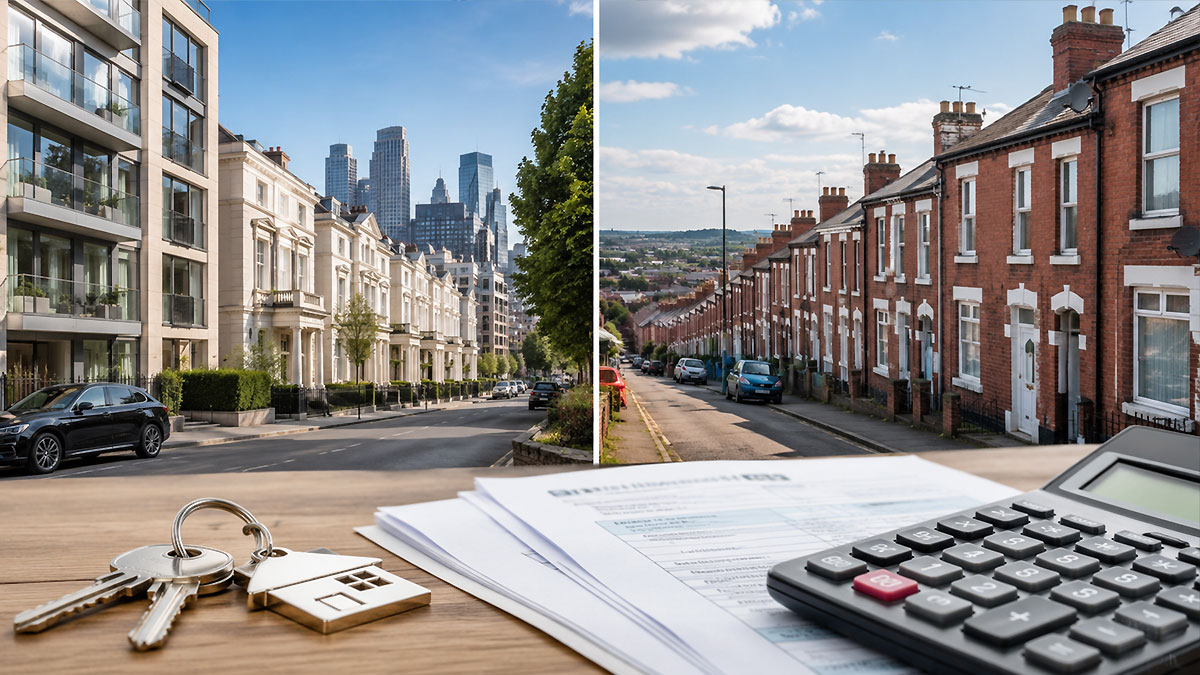
England’s Stamp Duty Divide Is Putting Southern First-Time Buyers Under Pressure
Most first-time buyers in northern England remain below the stamp-duty relief threshold, while buyers in London, the South East and the East of England are increasingly required to fund an additional tax bill.
Stamp duty has seen many changes over the last decade. It now operates as two entirely different taxes, depending on where you buy and whether you're a first-time buyer or an existing homeowner.
First-time buyers: the £300,000 line that divides the country
First time buyers get relief from stamp duty and pay nothing up to £300,000. 3 in 8 first-time buyers (38%) pay stamp duty nationally - but 6 in 10 pay nothing at all. Where you buy determines the extra cost of buying your first home.
In the North East, just 2.1% of first-time buyers face a stamp duty bill. In Yorkshire and the Humber, the figure is 3.8%, and in the North West and West Midlands, 6.2% and 9.3% respectively.
In each case, the majority of first-time buyers are buying at prices that sit comfortably below the £300,000 threshold where they would have to start paying stamp duty.
The South East and East of England are at the tipping point with 51% and 52% of first-time buyers in those regions paying stamp duty that adds to the cost of buying. In these areas, the average price of a home where stamp duty is paid is £395,000 and £390,000 respectively, well above the national average.
In London, nearly 8 in 10 (79.7%) pay stamp duty: the average first-time buyer house price is £475,000. The average stamp duty bill is £8,750, and this is cash that must be saved separately from a deposit and paid in full at completion.
Stamp duty costs and payment rates by English region
|
Region |
FTBs paying |
FTB median bill (where paid) |
FTB rate per £ |
Home movers paying |
Home mover median bill (where paid) |
HO rate per £ |
|
North East |
2.1% |
£3,750 |
1.0p/£1 |
63.5% |
£1,500 |
0.8p/£1 |
|
Yorks & Humber |
3.8% |
£2,500 |
0.7p/£1 |
82.8% |
£2,200 |
0.9p/£1 |
|
North West |
6.2% |
£2,500 |
0.7p/£1 |
84.0% |
£2,200 |
0.9p/£1 |
|
W Midlands |
9.3% |
£2,500 |
0.7p/£1 |
90.4% |
£3,250 |
1.2p/£1 |
|
East Midlands |
12.2% |
£2,500 |
0.7p/£1 |
91.5% |
£3,000 |
1.2p/£1 |
|
South West |
21.2% |
£2,500 |
0.7p/£1 |
92.5% |
£5,000 |
1.7p/£1 |
|
South East |
51.0% |
£5,000 |
1.3p/£1 |
96.6% |
£11,250 |
2.7p/£1 |
|
Eastern |
52.0% |
£4,500 |
1.2p/£1 |
96.4% |
£10,000 |
2.5p/£1 |
|
London |
79.7% |
£8,750 |
1.8p/£1 |
99.1% |
£20,000 |
3.3p/£1 |
Note: Stamp duty bill figures are median averages for buyers who pay stamp duty based on the homes they were looking to buy in H1 2026. FTBs below £300,000 pay nothing and are excluded from the median bill calculation. Rates shown as pence paid per £1 of the median purchase price for those who pay.
In the North and Midlands, the £300,000 threshold takes 9 in 10 first-time buyers out of paying anything extra to buy their home. In London and the South East, however, the cost of buying an average first-time buyer home is above £300,000 for many buyers, which means the majority of first-time buyers face a stamp duty bill on top of an often sizeable deposit.
For home movers, stamp duty is a near-certain cost wherever you live - and in Southern England it runs to five figures. 6 in 10 property purchases are made by existing homeowners. When the cost of moving becomes a meaningful friction, some of those moves don't happen, especially with lower levels of house price inflation in recent years across southern England.
Home-movers: stamp duty an inevitability
For existing homeowners buying their next property, there is no relief from stamp duty like that available for first-time buyers. This means more than 4 in 5 homeowners pay stamp duty in every English region bar the North East, where nearly two-thirds (63.5%) face a bill.
In the North, bills are modest - averaging £2,200 in both Yorkshire and the North West, where home-movers pay less than 1 penny in every pound of their purchase price as stamp duty.
Across Southern England the burden rises sharply and can have a big impact on the cost of moving home and whether people can afford to move at all. 95% of South East home movers pay stamp duty at an average cost of £11,250 - 2.7 pence in every pound. In London, where the median home mover asking price is £600,000, the bill reaches £20,000: more than three pence in every pound.
The gridlock effect and fiscal drag
Home movers are an important part of the housing market, accounting for 6 in every 10 property purchases. When moving costs climb to five figures in Southern England, some of those moves do not happen. This reduces demand for larger homes and also limits the supply of starter homes available to first-time buyers.
The growing cost of stamp duty for home buyers has been compounded by stamp duty price bands not keeping pace with house prices - akin to ’fiscal drag’ that boosts the cost of stamp duty tax over time.
The current £250,000 threshold where the 5% stamp duty rate starts for home movers was introduced over 11 years ago in 2014. If this was adjusted in line with house prices it would be around £380,000 today, saving the average home buyer up to £6,500 in stamp duty for purchases between £250,000 and £380,000.
A reminder of stamp duty thresholds in England
First-time buyers
Below £300,000 - you pay nothing. First-time buyer relief gives full exemption up to the threshold. At £299,000, the stamp duty bill is zero.
Above £300,000 - you pay 5% on the excess only. The rate applies to the amount above the threshold, not the full purchase price. At £350,000, that is 5% × £50,000 = £2,500.
Watch the £500,000 cliff edge. Above £500,000, first-time buyer relief disappears entirely. A property at £499,000 costs £9,950 in stamp duty. A property at £501,000 costs £15,050 — an extra £5,100 for a £2,000 more expensive home. If your search takes you near that level, factor it into your offer.
Home-movers
There is no equivalent stamp duty relief to first time buyers. Standard rates apply from £125,000 upwards: 2% on the portion between £125,000 and £250,000, then 5% on the portion between £250,000 and £925,000. Most home movers in England fall into the 5% band over £250,000.
Know your rate before you offer. The average stamp duty in the South East, is £11,250. In London the average price is £600,000 and £20,000 in stamp duty. Use a stamp duty calculator before making an offer - the bill is fixed at the price you agree and is due in cash at completion.
Key takeaways
- Around six in ten first-time buyers nationally pay no stamp duty, but the likelihood of paying varies significantly by region.
- Nearly 80% of London first-time buyers face a stamp-duty charge, compared with fewer than one in ten in several northern regions.
- The average London first-time buyer purchasing above the relief threshold faces a bill of approximately £8,750.
- Around half of first-time buyers in the South East and East of England now pay stamp duty as typical purchase prices move beyond the £300,000 relief threshold.
- Stamp duty is even harder to avoid for existing homeowners, with more than four in five home movers paying it in most English regions.
- London home movers face the greatest burden, with a typical bill of approximately £20,000 among those who pay.

Flats Offer Their Biggest Price Advantage Over Houses in 30 Years
With the average UK flat costing substantially less than a house, apartments may offer an increasingly accessible path to homeownership—provided buyers carefully examine lease terms, service charges and building management.
Finances squeezed or love a deal? Flats should be first on your list. Why? Despite the cost of all property types increasing in the last decade, flats are the best value they’ve been for 30 years.
How much cheaper is a flat?
The price of a flat has increased just over 10% since 2016. In contrast, the price of a house went up 43% in the same period.
What does that look like in monetary terms?
The average UK house now costs £327,000 – 1.7 times more than a flat. In comparison, a typical flat now costs £193,000.
|
Region |
Avg flat price |
Avg house price |
Ratio 2026 |
Ratio 2016 |
Avg price difference |
|
United Kingdom |
£193,000 |
£327,000 |
1.7× |
1.3× |
£134,000 |
Average flat and house prices by region
The price gap depends on your location.
South of England
Many Londoners are priced out of the house market and have no option but to purchase a flat. The cost of houses, together with a healthy supply of flats, keeps the capital’s house-flat ratio low at 1.9.
|
Region |
Avg flat price |
Avg house price |
Ratio 2026 |
Ratio 2016 |
Avg price difference |
|
London |
£416,000 |
£809,000 |
1.9× |
1.5× |
£393,000 |
|
South East |
£207,000 |
£480,000 |
2.3× |
1.9× |
£273,000 |
|
Eastern |
£186,000 |
£396,000 |
2.1× |
1.7× |
£210,000 |
|
South West |
£174,000 |
£368,000 |
2.1× |
1.7× |
£194,000 |
North, Midlands and Wales
The reverse is true in the Midlands, Wales and Northern regions, where the house-flat ratio peaks at 2.5. Despite this, flats are often overlooked completely as houses are relatively affordable.
|
Region |
Avg flat price |
Avg house price |
Ratio 2026 |
Ratio 2016 |
Avg price difference |
|
West Midlands |
£120,000 |
£296,000 |
2.5× |
1.8× |
£176,000 |
|
East Midlands |
£113,000 |
£264,000 |
2.3× |
1.8× |
£151,000 |
|
North West |
£120,000 |
£273,000 |
2.3× |
1.8× |
£153,000 |
|
Yorkshire & Humber |
£104,000 |
£250,000 |
2.4× |
1.9× |
£146,000 |
|
North East |
£86,000 |
£202,000 |
2.3× |
1.9× |
£116,000 |
|
Wales |
£116,000 |
£248,000 |
2.1× |
1.6× |
£132,000 |
Scotland (No long leasehold system)
The Scottish market is unique as flats, like houses, are freehold with no ground rent. This level playing field is clear, as the house-flat ratio has barely moved in a decade.
Flats in Scotland are appealing, selling in an average of 15 days – the same amount of time as houses. This compares to flats selling in an average of 42 days across the rest of the UK.
|
Region |
Avg flat price |
Avg house price |
Ratio 2026 |
Ratio 2016 |
Avg price difference |
|
Scotland |
£118,000 |
£223,000 |
1.9× |
1.8× |
£105,000 |
Mind the gap: why flat values have risen modestly
It’s tempting to dive in and make an offer when the average flat in England and Wales costs £164,200 but that value reflects an important aspect.
4 out of 5 flats for sale in England are leasehold and this keeps values in check. If you buy a leasehold flat, you’ll pay an average of £200 a year in ground rent and £1,900 in annual service charges. Conveyancing fees are also greater, plus short leases cost money to extend.
These charges, together with a different ownership structure, are also why leasehold flats take longer to sell. But flats shouldn’t be overlooked. They’re exceptional value right now, and active reforms will make it easier and cheaper to renew a lease.
Richard Donnell, Executive Director at Zoopla, comments:
"The gap between house and flat prices has never been wider, and for buyers who are prepared to do their homework, that presents an opportunity. For many, flats remain the main route into home ownership, particularly in London and the South East where the cost of buying a house is higher.
“Buying a leasehold flat is more complex than buying a house - lease length, service charges and ground rent terms all matter and vary significantly from one property to the next. This complexity is not the same as risk, and the leasehold system is being actively reformed.
“Buyers who invest time to research and understand the system and get support can take advantage of the gap between flat and house prices. A well-managed building with a long lease and stable service charges is a very different proposition from a property with less clarity on service charges and a short lease.”
Finding the right flat for you: 4 considerations
As well as offering the best value for 30 years, flats come with unique advantages. The views from upper floors can be stunning, you can get great communal facilities and someone else looks after major maintenance.
But before you fall in love with a flat, there are 4 key considerations:
Lease length
Check how long is left on the lease and get a legal quote to renew it before you exchange, especially if there’s less than 85 years left.
A specialist can advise whether it’s best to wait for The Leasehold and Freehold Reform Act 2024 to take effect before you buy a flat. These reforms are ready to be rolled out.
You might even benefit from waiting for The Commonhold and Leasehold Reform Bill to become an Act. These proposed reforms would give leaseholders even more rights but there’s a lengthy process ahead to make these law.
Service charges
The upkeep of blocks and communal facilities is paid for by flat owners through service charges.
Ask to see 3 years of accounts to establish what you might pay. It’s also wise to check a block yourself to see if it’s well maintained.
Ground rent
Two-thirds of leasehold listings have an annual, fixed ground rent below £250. A minority have an escalating or doubling clause that allows ground rents to rise infinitely. Reforms would ban this. Find out what ground rent is due before making an offer.
Building safety
If a flat is in a building 11 metres or taller, ensure there is an EWS1 certificate. Also ask if the building manager has budgeted for Building Safety Act costs.
Key takeaways
- The typical UK house now costs approximately 1.7 times as much as a flat, compared with 1.3 times a decade ago.
- Average flat values have risen much more slowly than house prices since 2016, creating a national price difference of approximately £134,000.
- Buyers can find some of the largest savings in the Midlands and northern England, where houses may cost more than twice as much as flats.
- Flats remain particularly important for buyers in London and the South East, where purchasing a house is unaffordable for many households.
- Before purchasing a leasehold flat, buyers should review the remaining lease term, service-charge history, ground-rent conditions and building-safety documentation.
- Current and proposed leasehold reforms may improve protections for flat owners, but buyers should still obtain independent legal advice.