
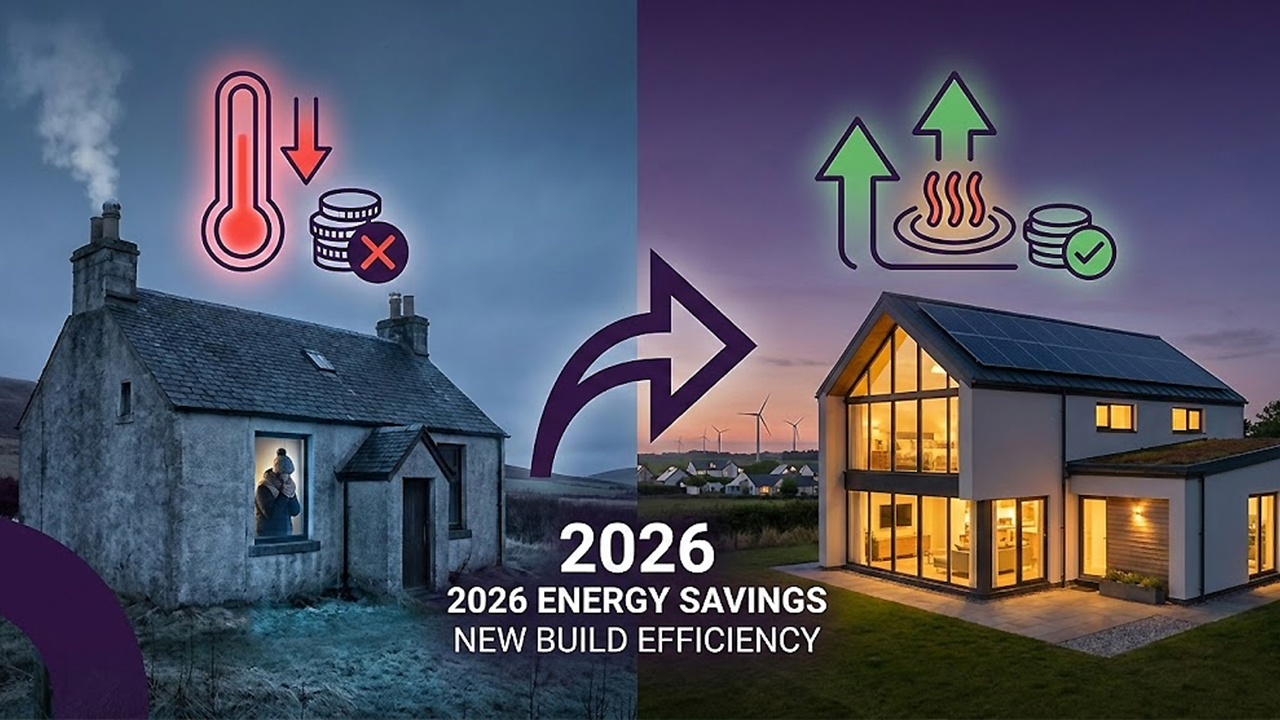
Ditch the Layers: Why 2026 New Builds are Killing the "Woolly Hat" WFH Look
If your WFH uniform currently involves a puffer jacket and fingerless gloves, you’re likely dreading the next energy app notification. We’ve all been there trying to type while shivering. But 2026’s new builds are flipping the script. Engineered to the latest Future Homes Standard, these properties are designed to trap every watt of warmth, keeping your home cozy and your 'bill shock' a thing of the past.
We’ve all felt it lately. That sharp intake of breath when the energy bill lands in your inbox and feels more like a mortgage statement.
Whether you’re living in a Victorian terrace, a charming cottage or a ‘40s semi, the sting of modern energy costs is a universal experience.
Unless you live in a new build, that is.
Because a new build isn't just a fresh start. In reality, they’re built for energy preservation and efficiency down to their very bones - like a thermal blanket for your finances.
From high-spec insulation and air-source heat pumps to solar panels and EV chargers, these homes save you serious money on energy bills every month.
Let’s see exactly how much of a difference that makes compared to an older home, with the latest cold, hard facts from the Home Builders Federation and Octopus Energy.
New builds save you over £420 every year
The most immediate energy-related benefit of a new build is the savings in your monthly bills.
On average, new-build homes are 21% cheaper to run than older properties because they’re far more energy efficient.
New build homeowners spend an average of £1,574 a year on energy, compared with £1,995 for those in older homes - a saving of £421.
If you’re moving from a property with an F or G EPC rating, you’ll feel even more of a saving. A new build is £618 a year cheaper to run.
You pay a 27% energy premium in older homes
Living in an older home effectively means paying a 27% premium just to keep the rooms warm.
People living in typical older homes spent an average of 27% more on overall energy costs last year compared to new build owners.
For those in F and G rated homes, that figure jumps to 39%.
We all want to do our bit for the planet. A new build cuts your household carbon emissions by up to 74% every year compared to the least efficient older homes.
Virtually all new builds have an A or B rating, emitting around 2,179kg of carbon annually.
On the other hand, a typical older home (EPC D) produces 3,266kg (50% more). F or G rated homes produce 3,787kg, which is 74% more than a new build.
The expensive alternative: Retrofitting an older home to modern standards
Your home is your biggest asset, and energy efficiency is now a major driver of market value.
Research by Octopus Energy found that heat pumps, solar PV and EV charging points can add a 6% premium to a home's market value.
But retrofitting comes at a cost.
Upgrading an older home to match the energy efficiency of a modern new build is a massive undertaking, costing between £23,100 and £83,000.
Energy efficiency isn’t the only benefit
If the lower bills haven’t already convinced you to pack your bags, there’s more to a new build than just a friendly relationship with your smart meter.
Choosing new comes with a few major perks that make the moving process - and life afterwards - a lot less stressful.
Exclusive buying schemes: One of the biggest wins is the leg-up to actually get through the door. From Own New Rate Reducer to Shared Ownership, there are a range of new-build schemes that make the maths of buying a home work in your favour.
Long-term warranties: Normally, a leaky roof or a temperamental boiler is your week (and savings) ruined. But most new builds come with a 10-year warranty, which is essentially peace of mind in a contract.
The blank canvas and personalisation: You don't have to spend your first 6 months remedying somebody else’s ‘creative’ DIY choices. You get a fresh, neutral space from day one and many developers let you pick your own kitchen units, tiling, flooring and more.
Key takeaways
- New builds are 21% cheaper to run than older homes, putting an extra £421 a year back in your pocket
- You can slash your household emissions by up to 74% (without having to recycle your own bathwater or live by candlelight)
- High-tech features like solar panels and heat pumps can add 6% to your home’s value - but the total cost of retrofitting an older home to modern standards costs anywhere from £23,100 to £83,000