Good News for Borrowers? Base Rate Cut to 4.5% Explained
How the 4.5% base rate could shape the property market and your mortgage.
The Bank of England has cut the base rate by 0.25% and it now stands at 4.5%.
The Bank's Monetary Policy Committee (MPC) voted by a majority of 7–2 to reduce the base rate by 0.25%, to 4.5%. Two members preferred to cut the rate by 0.5%, to 4.25%.
The MPC last met in December, when it voted by 6-3 to hold the base rate at 4.75%.
The base rate, also known as the 'bank rate' or the 'interest rate', is important because it influences the rates that lenders charge their borrowers for things like mortgages.
Why has the base rate been cut?
The Bank has been using the base rate as a way of taming inflation, which hit a recent peak of 11.1% in October 2022.
The Bank increased the base rate from 0.1% in late 2021, to 5.25% in August 2023. It then cut the rate twice last year, first in August and then again in November.
The good news is that inflation has recently dropped. The Consumer Prices Index (CPI), a key measure of inflation, stood at 2.5% in the year to December. While that’s still above the Bank’s 2% target, it’s edged down from 2.6% in the year to November. It’s the first decline in three months.
In its Monetary Policy Report today, the Bank said that inflation is “following a bumpy path”.
It explained: “We expect inflation to rise temporarily this year, to 3.7%, including because of higher energy prices. Inflation is expected to fall back again to the 2% target after that.
“We need to be confident that inflation will remain low and stable in a lasting way. The Monetary Policy Committee will decide carefully by how much and when it can cut interest rates.”
The report also warned that the economy “may not evolve as expected, including because there could be global shocks. For example, global trade tariffs or developments in the Middle East could impact some prices”.
Andrew Bailey, the Bank’s governor, took a cautious tone when the MPC held the base rate in December: “We think a gradual approach to future interest rate cuts remains right, but with the heightened uncertainty in the economy we can’t commit to when or by how much we will cut rates in the coming year,” he said at the time
What does the base rate cut mean for mortgage rates?
Borrowers with mortgages that track the base rate are set to see an almost immediate impact on their mortgage rates. Meanwhile borrowers on fixed-rate deals that expire soon are likely to see the lower base rate factored into new deals.
Richard Donnell, Executive Director of Zoopla, said: “Today’s cut to the base rate will provide a boost to market sentiment for home buyers, more than a boost to buying power.
“The path of base rates is already priced into fixed-rate mortgages, which account for the majority of new mortgages.
“It’s positive that 2025 is starting with lower mortgage rates than the last two years. The average five-year fixed rate at 75% LTV is 4.4% while a two-year fix is at 4.6% (according to Bank of England data).”
Hina Bhudia, partner, Knight Frank Finance, reacting to the Bank's Money & Credit data on 30 January, said that mortgage rates have been largely steady during the early weeks of the year - though a handful of lenders did reprice a little higher during recent bond market volatility.
“That volatility has since eased and we do expect lenders to cut mortgage rates as soon as they are able to do so. They have fresh lending targets at the beginning of the year and are eager to build market share,” explained Bhudia.
“If the Bank of England does opt to cut the base rate as many as five times this year, as Morgan Stanley analysts predicted this week, borrowers shouldn't be waiting long for a reprieve.”
In the past week, Barclays, Coventry Building Society, Yorkshire Building Society, Santander, TSB and Co-op have all cut mortgage rates, according to The Sun.
How could this impact the housing market more broadly?
Our latest House Price Index shows that the 2025 sales market has started off better than both 2024 and 2023. This bodes well for market activity throughout the rest of the year.
And today’s base rate decision has the potential to boost confidence and improve affordability, paving the way for more moves across the housing market.
“Greater stability in borrowing costs has brought more buyers and sellers back into the housing market having delayed moving decisions as rates spiked higher. The latest Zoopla data (to Sunday 4th February) shows a healthy supply of homes for sale and home buyer demand 9% higher than a year ago, with 11% more sales agreed,” explained Donnell.
“We expect average mortgage rates to remain in the 4-5% range over the year ahead. Lower base rates will support the wider economy which in turn, will support housing market activity where we expect 5% more housing sales over the year to 1.15m and average house price growth of 2.5%.”
Donnell added that the average mortgage rate for all outstanding mortgages has risen and now stands at 3.8% as borrowers refinance mortgages.
“The last of the ultra-low rate five-year fixes taken in 2021 will be refinancing in the next 18 months as the whole housing market sees mortgage rates resetting to current levels,” Donnell said.
Key takeaways
- The Bank of England has cut the base rate by 0.25%. It now stands at 4.5%
- The Bank's Monetary Policy Committee (MPC) voted by a majority of 7–2 to reduce the base rate by 0.25%, to 4.5%.
- The base rate, also known as the 'bank rate’ or the ‘interest rate’, influences the rates that lenders charge their borrowers
- Today’s decision comes after UK inflation fell to 2.5% in December. It was the first drop in the rate of inflation for three months

Smart Ways to Afford a New-Build Home
Did you know buying a new-build home can be more budget-friendly than an older property?
If you’re looking to move this year, you may have started to weigh up whether to buy a new-build home or an older property. There are many contributing factors to this decision, but a big one is affordability. And when it comes down to it, new builds win by a long way.
So let’s take a deeper look at this. What makes new builds the affordable option? And how can you make the most of your budget when buying a new home?
Buying schemes for first-time buyers and home movers
One of the biggest perks of new-build homes is the number of schemes and incentives available to buyers. For both first-time buyers and home movers, these initiatives can make all the difference when it comes to saving cash.
Some schemes you can take advantage of are:
-
Deposit Unlock: Buy a new home with a 5% deposit and dramatically reduce your upfront costs. This scheme is available to first-time buyers and home movers.
-
Own New - Rate Reducer: An initiative that can give you access to lower mortgage rates. It’s a regular mortgage that uses a developer incentive to lower monthly payments for the initial period. (This period depends on how much you earn and which lender you are matched with.) Rate Reducer enables you to access mortgage rates below 2.88%*, which could mean a potential saving of up to £304 on monthly repayments**. This scheme is available to first-time buyers and home movers.
-
Shared Ownership: Purchase a percentage of the property (typically between 25% and 75%) and pay rent on the remainder, making homeownership achievable on a smaller budget. This scheme is only available to first-time buyers.
-
Deposit contributions: Some developers will top up your deposit to help reduce the upfront cost of buying your home. This added support not only accelerates your home-buying journey but can also make you eligible for more competitive mortgage rates by increasing your deposit size. This is available to first-time buyers and home movers
-
Part exchange: If you own a home already, many house builders offer part exchange. This is where the developer purchases your existing property directly, allowing you to focus on securing your new home. With part exchange, the developer covers the cost of estate agent fees and acts as a guaranteed buyer for your current property, saving you the hassle of selling on the open market.
-
Assisted moving schemes: Through schemes like Easy Move, developers work with local estate agents to market and manage the sale of your existing home—and they’ll cover the costs.
Aside from Shared Ownership, these schemes are exclusive to new-build homes.
To find out about which buying schemes are available at developments near you, check the description of the property or development on Zoopla, contact the developer directly, or seek advice from a specialist new-build broker.
Green mortgages and utility bill savings
New homes are built to increasingly higher standards and regulations to ensure improved energy performance and reduced water usage. This means that as well as benefitting from new technology and building practices, you’ll also get a few financial perks.
Green mortgages reward you for living in an energy-efficient home. If the property you're buying or living in has an EPC rating of A or B, you'll get cashback or a better interest rate on your mortgage. With 86% of new builds earning an A or B EPC rating, new homes are very likely to qualify.
Speak to a mortgage broker for more details on green mortgages and whether you could get a better rate.
The improved energy efficiency of today’s new-build homes also means you could save £979 a year on your heating, hot water and lighting costs on average.** That’s a potential saving of £82 a month.
Another sustainable benefit of new homes that’s often overlooked is the built-in water efficiency. The average new build homeowner uses 40 litres less (per person per day) than owners of older properties. Less water used = a cheaper water bill!
With savings to both your water and energy bills, a new home can really help to lower your monthly outgoings.
Fewer unexpected financial surprises
With a new-build home, everything is brand new—from the boiler to the roof. This means you’re far less likely to face unexpected repairs or replacements. And any defects you do come across will be covered by the developer’s multi-year warranties.
With the time you and effort you save avoiding renovation work, you can focus on settling in and making it your own from day one.
Compare that to an older property, where you could quickly find yourself budgeting for a new boiler or kitchen renovation when you uncover its horrible hidden history. Research has even shown it could cost more than £70k to bring an old home up to the modern standards found in new-build homes.
Over time, these savings add up. While an older home might seem cheaper at first glance, the ongoing costs of maintenance, renovation work and running costs can make it more expensive in the long run.
Why buy new?
While every buyer’s situation is different, there are a number of reasons new homes can actually be a more affordable option than purchasing an existing property. With financial incentives, lower running costs, and no unexpected repairs to pay out for, they can save you money upfront and in the long term. Add in the peace of mind that comes with warranties and guarantees, it’s clear why so many buyers are turning to the new build market.
*Example assumes a 3% homebuilder incentive and is based on mortgage rates available in the market, with a 2 year initial period and an LTV of 75%. Savings made in the initial fixed period only and mortgage repayments may increase thereafter. Independent financial advice must be sought from a regulated mortgage broker to access this scheme. This example should be used as a guide only and does not represent the suitability, eligibility or availability of mortgage offers for users. For exact figures, users will need to approach an official mortgage lender. Your home may be repossessed if you do not keep up your mortgage repayments. Rates valid as of 14-01-2025
**Example based on market interest rates, with an average house price of £360,000 and an average mortgage term of 35 years. Assumes a 3% homebuilder incentive and a 2 year fix, with 75% LTV mortgage. Independent financial advice must be sought from a regulated mortgage broker to access this scheme. This example should be used as a guide only and does not represent the suitability, eligibility or availability of mortgage offers for users. For exact figures, users will need to approach an official mortgage lender. Your home may be repossessed if you do not keep up your mortgage repayments. Rates valid as of 14-01-2025
Key takeaways
- You can access buying schemes with new builds to save you money and help you buy
- You can get a green mortgage and save on utility bills by living in an energy-efficient new build
- You don’t have to worry about maintenance costs with a new build
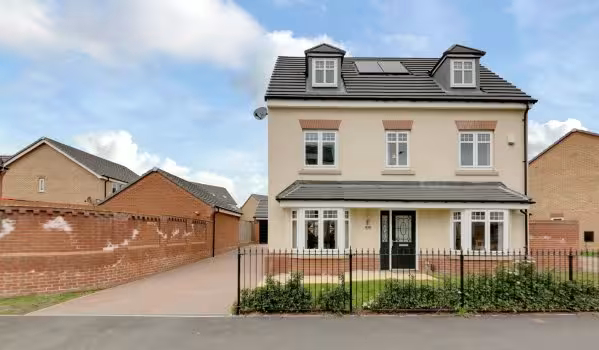
Why new-build homes offer so much more : Building better
A deep dive into why new homes are built to a much higher standard compared to older homes.
There’s no doubt that when it comes to buying a home, the structure of the property and its build quality can come out at the top of people’s considerations.
For some, a quality build means an older property. But with ever-evolving modern techniques, standards and innovations in construction, the build quality of brand new homes can come out as far superior to those built decades or centuries ago.
From improved sustainability to designs focused on modern-day living, new homes are testament to how much the home-building industry has improved to meet the needs of today’s buyers. Let’s take a deeper look.
Modern techniques
Older homes were often built with features that fall short of modern standards. But today, new homes have traded in single-pane windows and poor insulation for double or triple glazing and energy efficient heat-trapping materials.
Modern Methods of Construction (MMC) incorporate off-site manufacturing techniques, where components such as walls, floors or entire units are manufactured in a factory and then transported to the site for assembly. MMC aims to reduce construction time, increase sustainability and ensure higher consistency in quality compared to traditional construction methods.
Consumer protections
Significant strides have also been made in consumer protections for new-build homes. With initiatives like the New Homes Quality Board (NHQB) and the New Homes Ombudsman Service (NHOS), buyers now enjoy unprecedented support and transparency during the buying process. Builders are required to meet strict quality standards, and the consumer codes in place mean that they must deal with any issue raised by a customer quickly and fairly. If they don’t, the customer has the right to access an independent ombudsman service. This setup is currently voluntary but now covers the majority of new homes sold each year. It ensures that buyers can make informed decisions with confidence, knowing they’re protected every step of the way.
Customer satisfaction
Customer satisfaction levels for new-build homes are at an all-time high. According to the latest National New Homes Customer Satisfaction Survey, over 90% of new home buyers say they’d recommend their builder to a friend. This reflects the efforts made by the house-building industry to improve quality and service.
Recommendations from the Competition and Markets Authority (CMA) are also increasing transparency and raising the bar for quality across the sector.
Energy efficiency
Modern homes also deliver on efficiency where older properties often fall short. New-build homes are incredibly energy efficient, emitting 65% less carbon than older properties—just 1.22 tonnes annually compared to 3.51 tonnes for older homes. With 86% of new builds earning an A or B EPC rating, compared to under 5% of older homes, they offer significant savings on energy bills. The average energy and water costs for new-build houses is 50% cheaper, resulting in a potential saving of £979 a year.
Sustainability
The focus on quality and sustainability is particularly important as the demand for housing grows. The CMA’s recent house-building market study highlighted the persistent challenges posed by the planning system, which has long hindered the delivery of new homes. While planning reform remains a pressing issue, the housing industry continues to adapt and innovate despite these obstacles. Builders have proven resilient, meeting the evolving needs of buyers while navigating a complex regulatory landscape.
Ultimately, today’s homes are more efficient, and more consumer-friendly than ever before. Modern construction techniques ensure that homes are built to last, while advancements in materials and technology enhance their performance and sustainability.
Key takeaways
- New homes are built with modern techniques and more energy efficient materials than older homes
- Consumer protections are in place meaning builders are required to meet strict quality and transparency standards
- Over 90% of new home buyers say they’d recommend their builder to a friend
- The average energy and water costs for new-build houses is 50% cheaper than older homes, resulting in a potential saving of £979 a year